
7 Best Taxi Dispatch Software Platforms in 2026


Dispatch is often the first pressure point in a growing taxi operation. As booking flow increases, assignments begin to stack, drivers drift into the wrong areas, and pickup times start slipping.
Even a moderate rise in demand can quickly expose structural limits. In practice, a 10–20% increase in active bookings may push average pickup times up by 25–30% when allocation still relies on manual decisions. At the same time, many fleets operate at only 60–70% driver utilization, leaving vehicles idle while cost per trip continues to rise.
As fleets expand across zones and booking channels, dispatch shifts from
assigning the next ride to balancing the entire operation in real time. The
right software determines whether growth strengthens margins or strains
them.
This guide reviews seven taxi dispatch platforms from an operational
perspective, focusing on utilization, allocation speed, and scalable fleet
management in 2026. This guide reviews seven taxi dispatch platforms from an
operational perspective, focusing on utilization, allocation speed, and
scalable fleet management in 2026.
How We Evaluated the Platforms
Many fleets today evaluate cloud based taxi dispatch software because it allows dispatchers, drivers, and managers to work from the same live system without local infrastructure. Since each platform in this guide is presented in a structured overview, we assessed them using the same core dimensions that matter in daily taxi operations.
Each solution was reviewed based on:
- Standout dispatch and fleet management capabilities
- Integrations with payments, maps, telephony, and booking channels
- Pricing model, taxi dispatch system prices, and overall cost as fleets scale
- Ideal use case, including fleet type and operational scope
Using consistent criteria makes it easier to see where platforms differ in real operational fit rather than just feature lists.
-
Mobion
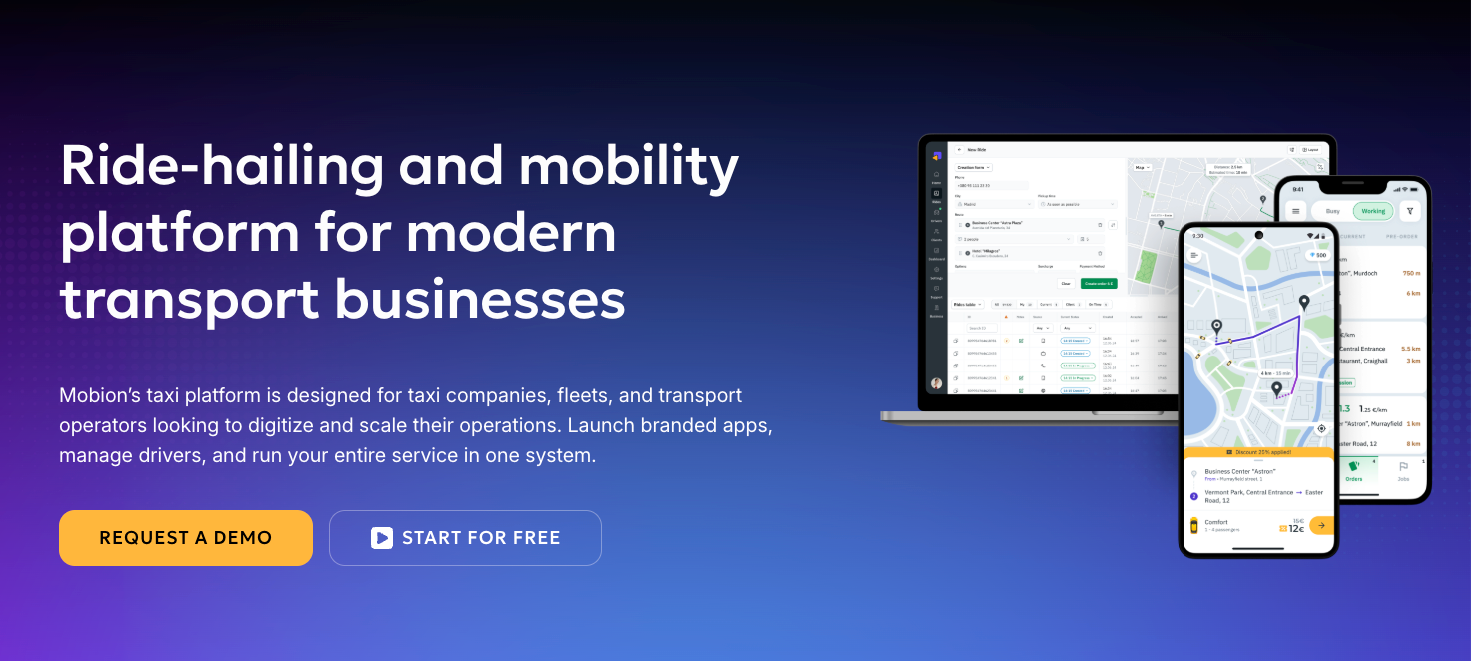
For fleets that want dispatch to run in one place rather than across separate tools, Mobion offers a cloud based taxi dispatch system that keeps bookings, drivers, and vehicles synchronized in real time. Dispatchers see ride status, driver availability, and demand changes as they happen, and can adjust assignments or coverage without switching screens. This helps fleets keep drivers, passengers, and dispatchers synchronized even when booking levels shift across areas or time periods.
The system suits both new operators setting up structured dispatch and established fleets moving away from manual or disconnected workflows. Teams usually gain clearer oversight of driver utilization and trip flow without adding dispatch effort. In comparison with other dispatch solutions, Mobion provides a solid level of operational capability in software that remains easier to adopt and more cost-efficient to run. This makes it practical to introduce structured dispatch early and maintain reliable service as operations grow.
Category Details Standout Features Automated dispatching, driver and passenger apps, real-time fleet tracking, booking management Integrations Payments, maps and navigation, telephony, API integrations, booking channels Pricing Model Subscription-based, scalable by fleet size, custom enterprise pricing Ideal For Taxi startups, growing private hire fleets, and operators scaling into higher volumes or wider coverage -
iCabbi
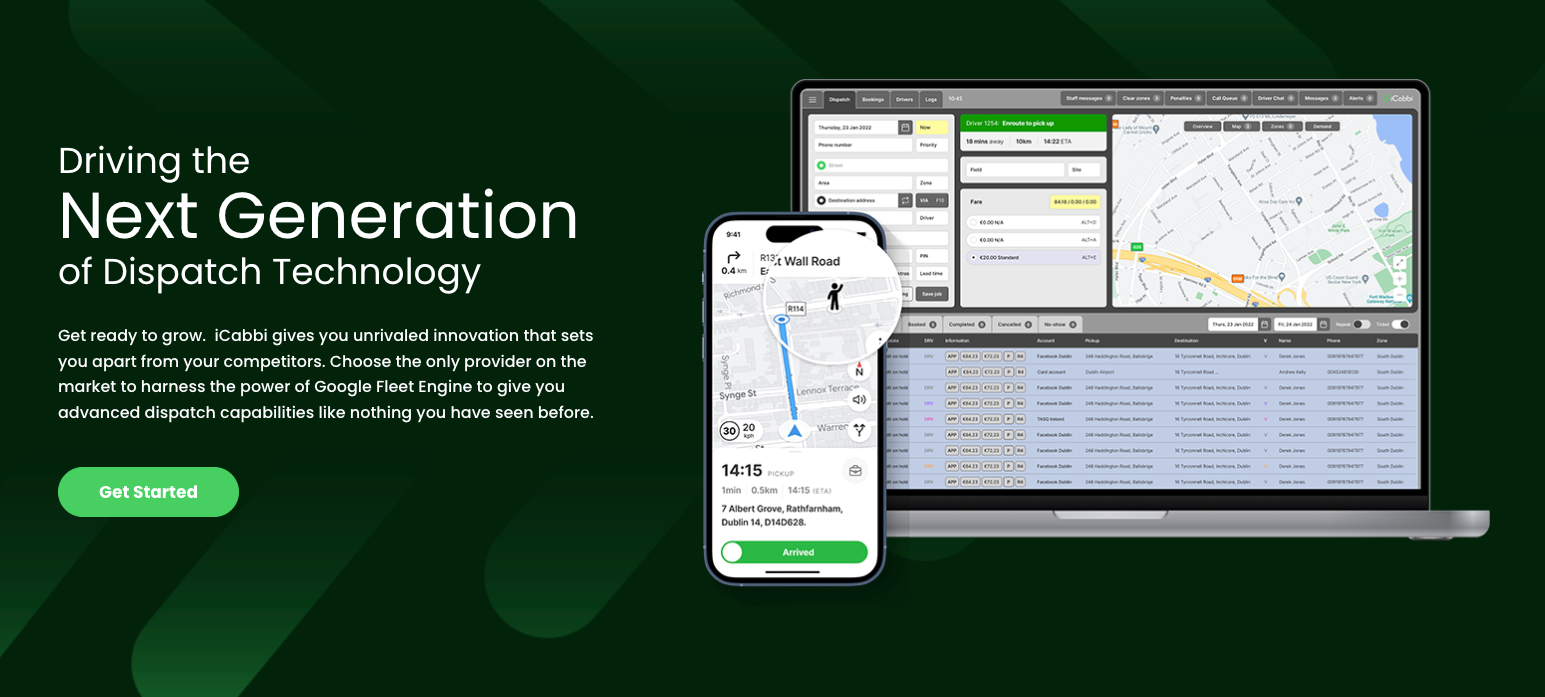
iCabbi is a cloud-based taxi dispatch platform used by taxi and private hire companies running larger fleets or working across several service areas. It allows dispatch teams to manage bookings, driver allocation, and fleet activity from one place instead of switching between separate tools. This setup is particularly useful where demand is spread across regions or where fleets handle contracted and pre-booked work alongside regular trips. iCabbi is generally chosen by operators that already run at scale and need consistent dispatch processes, operational reporting, and integration across wider transport networks.
Category Details Standout Features Automated dispatch, multi-fleet management, driver apps, advanced booking and scheduling Integrations Payments, telephony, booking channels, partner networks, APIs Pricing Model Enterprise subscription, typically per vehicle or fleet scale Ideal For Established taxi and private hire fleets, multi-region operators, and high-volume dispatch environments -
Autocab
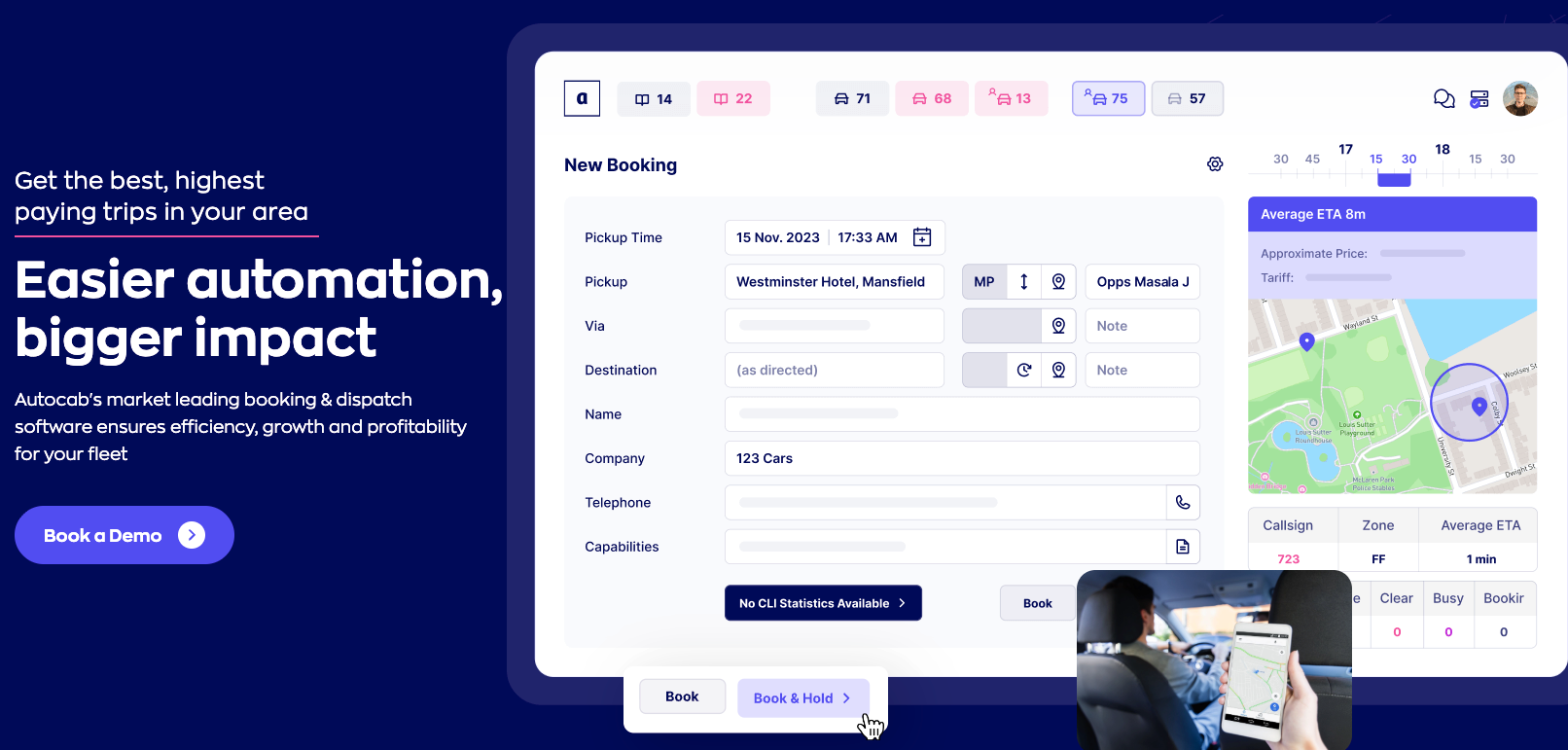
Autocab provides taxi and driver dispatch software used by established taxi operators and private hire networks that rely on multiple booking channels and partner coverage. The platform helps fleets manage incoming demand, allocate drivers efficiently, and coordinate trips across networked operators. It is commonly deployed where companies process app bookings, phone requests, and contracted work simultaneously, or where rides may be fulfilled through partner fleets. Autocab is generally suited to operators managing higher booking volumes and structured, multi-channel dispatch environments.
Category Details Standout Features Network-enabled dispatch, driver apps, booking management, partner fleet coordination Integrations Booking apps, payment systems, telephony, partner networks, APIs Pricing Model Enterprise subscription, often structured per vehicle or network scale Ideal For Established taxi operators, network-based fleets, and multi-channel dispatch environments -
Yelowsoft
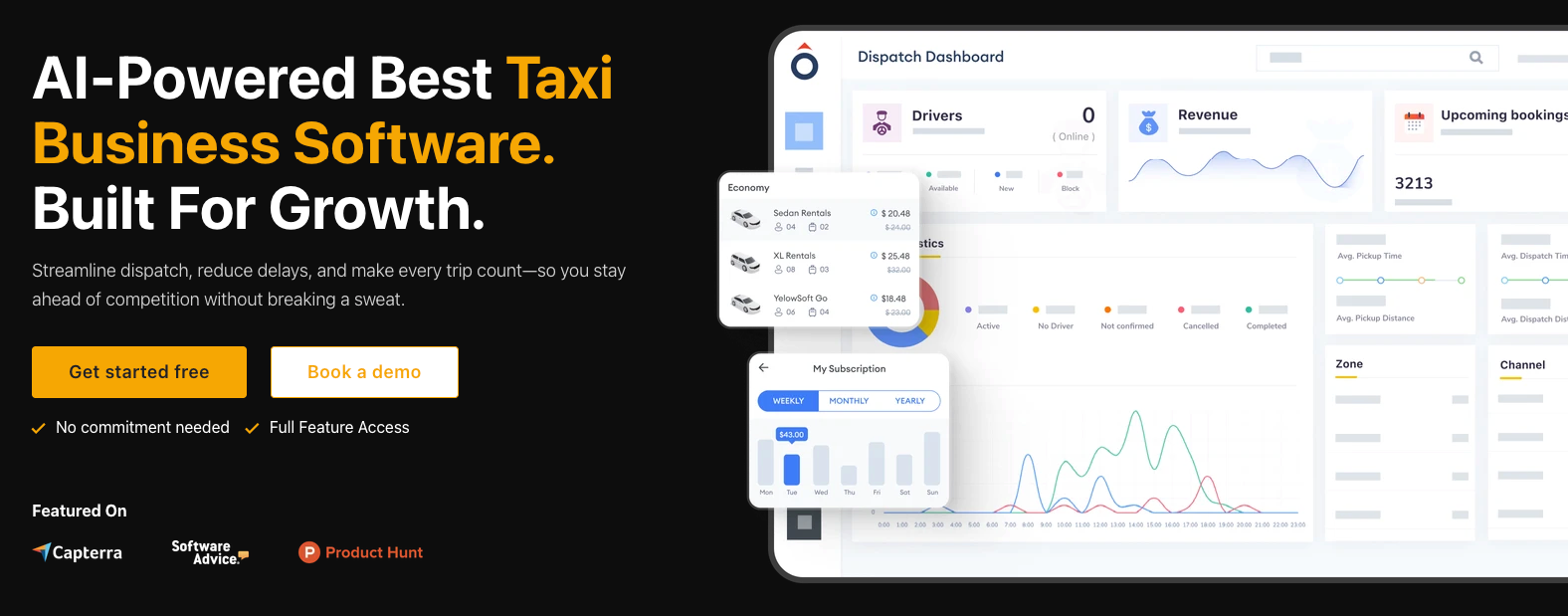
Yelowsoft focuses on businesses looking for taxi software like Uber while building their own branded ride-hailing service. Instead of developing separate rider apps, driver tools, and booking management from scratch, operators get a ready dispatch workspace with white-label mobile apps included. This approach helps new fleets bring drivers online quickly, start accepting trips, and deliver a consistent experience for passengers across booking channels. As operations expand into new areas or volumes grow, Yelowsoft continues to support dispatch coordination without requiring a change of system.
Category Details Standout Features White-label apps, automated dispatch, booking management, driver and passenger apps Integrations Payments, maps and navigation, SMS/notifications, APIs Pricing Model Subscription tiers based on fleet size and features Ideal For Taxi startups, ride-hailing businesses, and growing fleets launching branded services -
Taxicaller
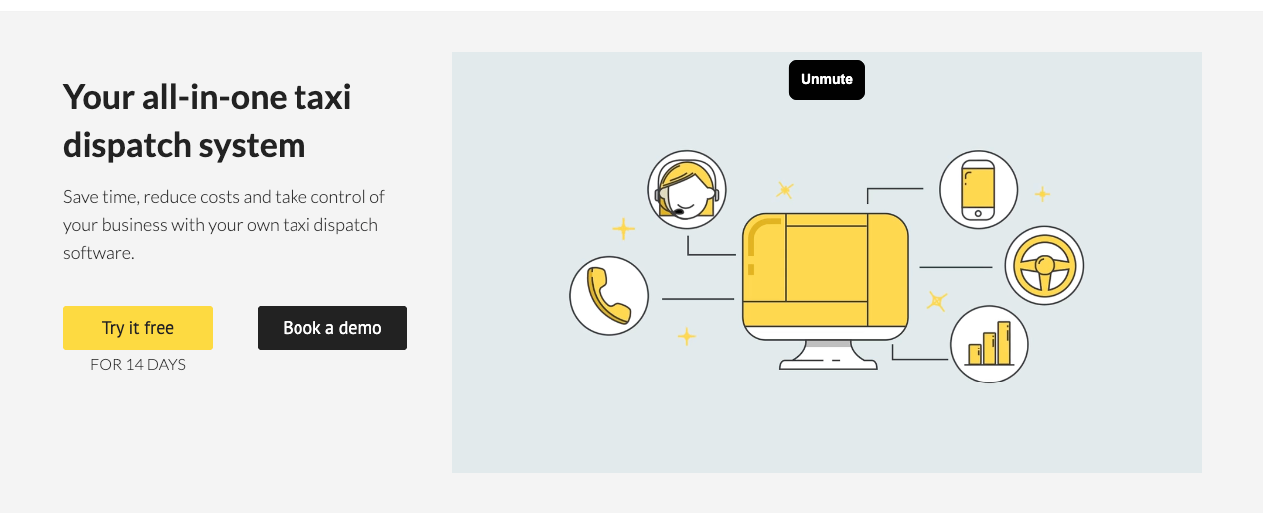
For many smaller taxi operators, dispatch needs to work without added complexity. TaxiCaller is often considered in these situations, particularly when fleets want a clear interface and predictable daily workflows. The platform handles bookings, driver allocation, and vehicle tracking without requiring extensive configuration or technical overhead. This makes it suitable for companies focused on keeping operations steady rather than experimenting with network-based models. TaxiCaller supports everyday ride management, driver app connectivity, and basic automation that helps dispatchers stay organized during routine demand.
Category Details Standout Features Automated dispatch, driver and passenger apps, booking management, real-time tracking Integrations Payments, SMS notifications, maps and navigation, APIs Pricing Model Subscription-based, typically per vehicle Ideal For Small to mid-sized taxi companies seeking straightforward dispatch management -
Cab Treasure

Cab Treasure is often encountered in fleets that run several service types or follow specific local operating rules. Dispatch teams can shape booking flows, allocation rules, and service structures around how their business actually works rather than adjusting processes to preset software logic. This approach fits operators handling mixed work such as standard taxi, private hire, or contract transport. Cab Treasure also provides detailed operational data, which helps companies refine dispatch procedures over time instead of relying on fixed automation models.
Category Details Standout Features Customizable dispatch workflows, booking management, driver apps, reporting tools Integrations Payments, telephony, maps and navigation, APIs Pricing Model Custom pricing based on configuration and fleet size Ideal For Taxi and private hire fleets needing configurable dispatch and tailored workflows -
AllRide

Some mobility operators run more than one type of service at the same time. Taxi, ride-hailing, shuttle programs, sometimes even contracted transport can operate under the same brand. In these cases, AllRide becomes relevant because it keeps bookings, drivers, and coverage areas inside one dispatch setup rather than splitting them across separate systems. That svtructure helps teams coordinate mixed fleets and expand into new service models without losing operational clarity. The platform also includes tools for managing partners and service zones when networks become more complex.
Category Details Standout Features Multi-service dispatch, ride-hailing and taxi support, partner management, booking management Integrations Payments, maps and navigation, APIs, third-party mobility services Pricing Model Subscription-based, typically scaled by fleet or service scope Ideal For Mobility operators, mixed transport fleets, and services combining taxi and ride-hailing
Final Comparison of Top Rated Taxi Dispatch Software
Selecting the best taxi dispatch software depends on how each platform handles automation, integrations, and fleet scale in practice. The comparison below distills these differences into a clear snapshot, helping operators see which solutions match startup needs, growing fleets, or large multi-region taxi operations.
| Platform | Integration Scope | Pricing Model | Scalability Range | Customization Level | Operational Focus |
|---|---|---|---|---|---|
| Mobion | Payments, maps, telephony, APIs, booking channels | Subscription, fleet-based tiers | Small to large fleets | High | End-to-end dispatch coordination |
| iCabbi | Enterprise integrations, telephony, payments, partner systems | Enterprise licensing | Medium to large fleets | Medium | Multi-region fleet control |
| Autocab | Booking apps, partner networks, telephony, payments | Enterprise / network pricing | Medium to large fleets | Medium | Network dispatch coordination |
| Yelowsoft | Payments, maps, notifications, APIs | Tiered SaaS pricing | Small to medium fleets | Medium | Branded ride-hailing operations |
| TaxiCaller | Payments, SMS, maps, APIs | Per-vehicle subscription | Small to medium fleets | Low to medium | Stable daily dispatch |
| Cab Treasure | Telephony, payments, maps, custom integrations | Custom pricing | Small to medium fleets | High | Configurable workflows |
| AllRide | Mobility services, APIs, payments, maps | SaaS subscription | Medium to large fleets | Medium to high | Multi-service coordination |
How to Choose the Right Taxi Dispatch Software

When reviewing top taxi dispatch software provider companies, the most useful starting point is your own dispatch reality. Fleets vary in how trips are assigned, where drivers operate, and how bookings arrive, so the same software can feel perfectly suited in one operation and restrictive in another. The task is to recognize which type of system fits how your fleet already works and how it is likely to evolve.
A clear selection path is to move from current operations to system fit and then to future growth.
-
Look at how your dispatch actually runs
Consider the structure you manage every day:
- Are most trips immediate, scheduled, or mixed?
- Do drivers stay in zones or move across areas?
- Do bookings arrive by phone, app, partners, or all of them?
- Do you operate one service or several types together?
These patterns indicate the level of dispatch structure your software must support.
-
Check how platforms match that structure
Compare systems against the way you operate:
- How rides are assigned and balanced
- Which tools connect to payments and booking channels
- What dispatchers see and control in real time
- How pricing changes as fleet size grows
A good fit supports your workflow without constant workarounds.
-
Make sure it still fits as you expand
Think about likely changes:
- Larger fleet or wider coverage
- Additional services or booking sources
- Higher booking volume
Software that matches both current operations and expected growth is far more likely to remain effective long term.
Final Thoughts
In practice, choosing dispatch software is about whether it fits how a fleet actually operates day to day and whether the cost stays reasonable as the business grows. Fleets vary in the number of taxis they operate, the mix of trips they handle, their service coverage, and the pace of expansion, so the right system is usually the one that supports existing workflows without forcing major change. The platforms in this guide reflect that reality, from tools that help smaller operators keep dispatch organised to systems suited to higher volumes or mixed services.
Mobion fits naturally into both contexts. Existing taxi or mobility operations can adopt it without major disruption, while new operators get the essential dispatch capabilities already in place from the start. For startups, choosing a cheap taxi dispatch system may seem like the easiest way to reduce upfront costs. In practice, it’s often more valuable to choose a platform that can support your business as it grows, helping you avoid a costly migration later. As operations expand, the same system continues to handle added workflows, integrations, and service types, so fleets do not need to replace their dispatch platform as they grow.
Request a demo to see how Mobion dispatch works in real fleet scenarios.
F.A.Q.
Ready to revolutionize your taxi business?
Choose what you need: