
Traditional Taxi Meter vs Digital Taxi Meter: Which Is Better Today

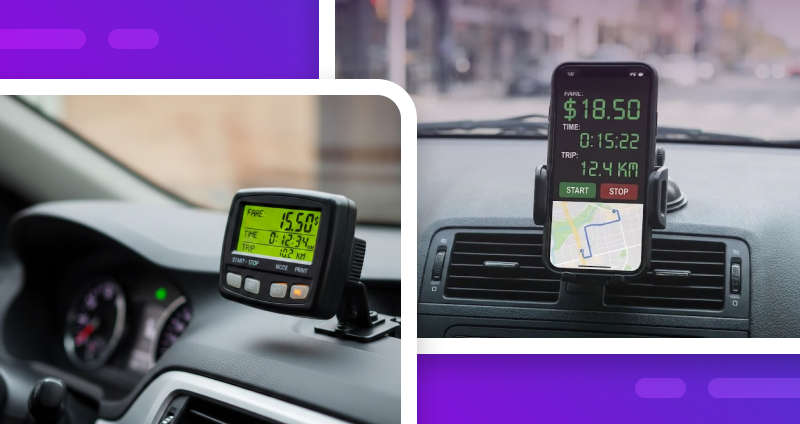
Taxi pricing did not become standardized overnight. In the early decades of motorized cab services, fares were frequently set through negotiation or rough estimation. That created friction. Regulators struggled to control overcharging, and passengers had little way to verify what a trip should cost. The solution was mechanical rather than procedural. A device inside the vehicle could calculate price using measurable inputs instead of judgment. The taximeter patented by Wilhelm Bruhn in 1891 laid the foundation for that approach, and by the mid-20th century certified meters were embedded into taxi licensing frameworks across many European and North American cities.
The principle was simple: distance plus time equals fare. What has changed is where that calculation happens. As dispatch and booking moved into connected platforms, pricing logic followed. In many operations today, the function operates as a taxi meter calculator within driver apps and taxi company software, configured centrally rather than adjusted car by car.
Before comparing models, it makes sense to clarify what a taximeter actually does and how it works in practice.
What Is a Taxi Meter?
A taxi meter is the mechanism that determines how much a ride costs by tracking distance and time during the trip. In its familiar form, it is a certified unit fitted in the vehicle and connected to movement sensors so the fare increases as the journey progresses or the car waits in traffic. Local tariff settings ensure drivers apply the same pricing rules. In practice, the taximeter meaning is simply the regulated way taxis convert trip data into a fare.
How Do Taxi Meters Work?
During a taxi ride, the meter does not wait until the end to calculate the price. It keeps updating the amount as the journey unfolds. Movement increases the fare one way, delays increase it another. When the car is progressing through traffic, distance drives the change. When it slows or stops, time begins to matter more. Drivers and passengers both see the number rise gradually rather than appear all at once at drop-off.
The underlying idea has stayed the same for generations. What has changed is how meters sense motion, track time, and apply tariffs. That difference becomes clearer when comparing older in-vehicle meters with the digital systems many taxis use today.
How a Traditional Taxi Meter Works
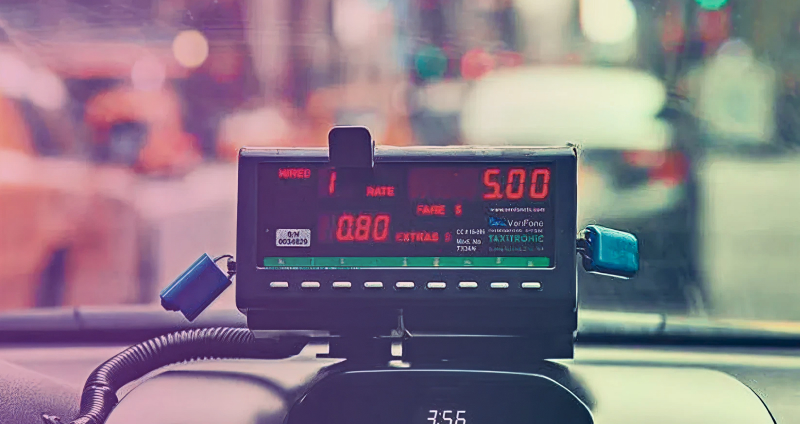
A traditional taxi meter is built into the vehicle so it can read movement directly from the drivetrain rather than rely on estimates. Earlier units were driven by a flexible cable from the gearbox. Later designs switched to electronic pulses generated as the wheels rotate. Each pulse represents a tiny slice of distance, and the meter accumulates these slices throughout the trip. Alongside that, an internal timer keeps counting. The device constantly compares current speed with a preset changeover point. Above it, distance advances the fare. Below it, time takes over, which is why waiting at lights or in traffic still increases the total.
Tariffs and surcharges are programmed during certification and then sealed. Inspectors periodically check accuracy, often using a measured test run or simulated pulse input to confirm the taxi meter stays within tolerance.
Pros of a traditional taxi meter:
- precise distance tracking from vehicle motion
- legally certified and widely accepted by regulators
- resistant to tampering once sealed
Cons of a traditional taxi meter:
- hardware installation and servicing per vehicle
- tariff changes require physical access
- weak connection to modern dispatch or booking systems
How a Modern Digital Taxi Meter Works
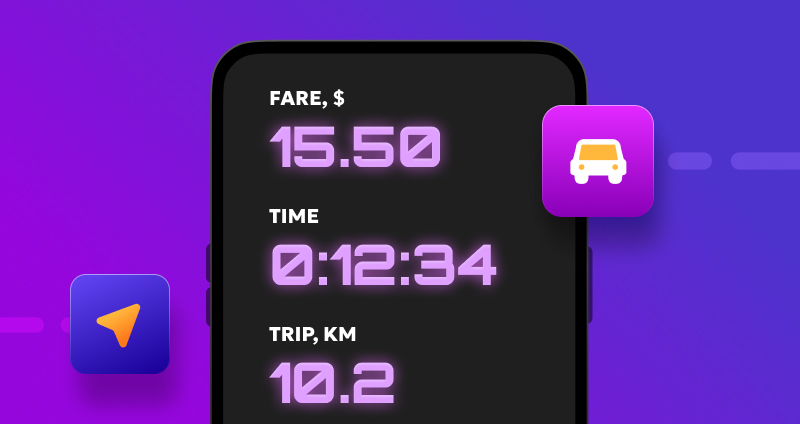
A modern digital taxi meter does not rely on vehicle wiring or drivetrain signals. It runs inside the driver’s device and calculates the fare from live trip data. Position updates arrive continuously from GPS, and the system reconstructs the path of the vehicle to determine distance travelled. Time is counted in parallel. The pricing logic mirrors the familiar behavior of traditional meters: forward motion increases the fare by distance, while slow movement or stops shift the calculation toward time so congestion and waiting are still reflected.
Because everything is software-based, pricing parameters are managed centrally and distributed to vehicles through the app. In many fleets, this setup functions as a taxi meter online within broader ride hailing software, where booking, trip tracking, and fare computation stay aligned in one environment. Location smoothing, map matching, and route validation help keep measurements stable despite signal noise.
Pros of a digital taxi meter:
- no hardware installation per vehicle
- immediate tariff updates fleetwide
- seamless link with booking and dispatch
Cons of a digital taxi meter:
- sensitive to GPS conditions
- requires connected smart devices
- legal status differs across regions
Traditional vs Digital Taxi Meter: Final Comparison
The choice between a traditional taxi meter and a digital alternative is no longer only about technology. It reflects how taxi operations themselves have changed. Classical meters were designed for street-hail environments, where each vehicle operated largely independently and fares had to be calculated inside the car. That model still fits tightly regulated markets and rank-based taxi services.
Most fleets today, however, operate through bookings, dispatch systems, and mobile driver workflows. In this environment, fare calculation benefits from being part of the same platform that manages trips and vehicles. A taxi meter app aligns pricing with booking data, route tracking, and reporting, which is difficult to achieve with isolated hardware meters. For operators, this shift affects not just fare accuracy but also tariff control, analytics, and scalability across the fleet.
| Aspect | Traditional taxi meter | Digital taxi meter |
|---|---|---|
| Fare inputs | Vehicle distance pulses + time | GPS distance + time |
| Installation | Hardware per vehicle | Software in driver device |
| Tariff updates | Physical reprogramming | Central configuration |
| Dispatch integration | None or limited | Native |
| Trip data | Minimal | Full trip dataset |
| Scalability | Vehicle by vehicle | Fleetwide |
| Best fit | Street-hail taxis | App and booked fleets |
In practical terms, digital meters now match how modern taxi businesses operate: connected, centrally managed, and data-driven. Traditional meters remain relevant where regulation requires certified in-vehicle devices. Elsewhere, software-based pricing is becoming the default.
If you are evaluating fare technology for your fleet, it helps to review real operating scenarios and regulatory constraints. Mobion provides consultation and ready taxi platform solutions tailored to fleet size, market rules, and service model, from digital meter setup to full dispatch and booking integration. Contact Us to discuss the right configuration for your taxi operations.
F.A.Q.
Ready to revolutionize your taxi business?
Choose what you need: