
Local SEO for Taxi Company: A Business Growth Guide for 2026


Launching a taxi company today is easier than ever. Standing out is not. New operators often focus on vehicles, drivers, and pricing, but overlook how customers actually choose a service. When someone needs a ride, they search nearby and act fast. If your business does not appear at the right moment, it effectively does not exist. This is where local visibility becomes a competitive advantage. Taxi companies that understand how search results work gain trust faster and convert intent into real demand. A strong local ranking helps turn searches into calls and bookings, especially in crowded markets. Combined with reliable technology and software for taxi business, local search visibility becomes part of a scalable growth system. Below, we look at how this system works and how each part connects across the entire article.
What Is Local SEO and Why It Matters for Taxi Business Growth
For a taxi company, local SEO is not about promotion. It decides whether the business shows up when it matters or stays invisible. Most customers do not plan their rides in advance. They search at the moment they need transport, usually on a phone, and make a quick decision. If a taxi service does not appear clearly in that instant, it is rarely considered later.
Local SEO works because it mirrors how taxi services function in the real world. Location defines relevance. Availability influences choice. Trust removes hesitation. When search results reflect these realities, people move from search to action almost automatically.
In practice, strong local visibility comes down to a few basics done consistently:
- Business information that is always accurate and up to date
- Service areas that match where drivers actually operate
- Clear and immediate options to call or book
- Signals that make the company feel reliable at first glance
When these elements align, visibility becomes dependable rather than accidental and starts supporting business optimization. With this foundation in place, it becomes easier to see how people search for taxi services today, which we look at next.
How People Find Taxis Today
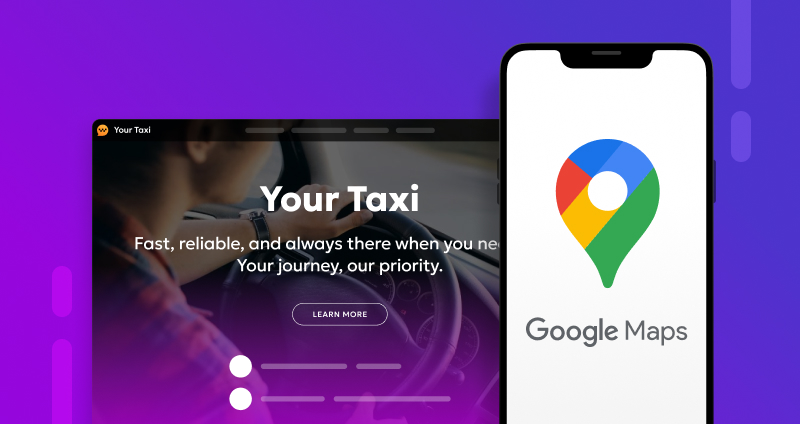
Finding a taxi today rarely starts with a phone call or a recommendation. It starts with a quick search, usually on a mobile device, and often in a hurry. Customers expect to see clear options they can trust and act on immediately. That is why a corporate ride management website plays a key role. It becomes the place where search visibility turns into confidence before a customer chooses how and where to book.
Google Maps vs organic results
People do not search for a taxi the same way they search for information. In most cases, there is no time to read, compare, or scroll. The decision happens fast. This is why Google Maps and organic results play very different roles.
Organic search helps when someone is learning about a company or checking details in advance. Google Maps is used when a ride is needed right now. It shows what is nearby, what looks active, and who can be contacted instantly. In practice, Maps behaves like a local search engine built for quick choices, not long consideration.
| Aspect | Google Maps | Organic Results |
|---|---|---|
| Purpose | Find a nearby option | Learn and compare |
| Typical timing | Immediate need | No urgency |
| User behavior | Act first | Read first |
| Booking path | Direct | Indirect |
| Importance for taxis | High | Limited |
This difference is why Maps visibility has such a strong impact on real taxi demand.
“Near me” search behavior
When people add “near me” to a search, they are not exploring options. They are reacting to a situation. Something changed, plans broke, or time ran out. A taxi is needed now, not later. In these moments, users expect Google to do the work for them. They do not adjust filters or read descriptions. They look at what appears first and choose quickly.
For taxi companies, this behavior leaves little room for error. If location details are unclear or visibility is weak, the opportunity is gone. Proximity and trust matter more than brand names. This is why “near me” searches often translate into direct calls or bookings within minutes, not hours.
Google Business Profile for Taxi Companies
For taxi companies, Google Business Profile is often the first real point of contact with a customer. Before anyone visits a website or downloads an app, they see a business name, location, rating, and signs of recent activity. That snapshot shapes trust in seconds. In local search, this profile works as a business listing in seo that directly influences who gets chosen and who gets skipped.
Visibility depends less on filling every field and more on how well the profile reflects real operations. Google prioritizes clarity and consistency because users rely on them when making fast decisions.
-
What actually impacts visibility
Active profiles with accurate information and regular user interaction tend to appear more often. -
Categories and relevance
The primary category tells Google when a taxi company should be shown and to whom. -
Service areas and coverage
These should mirror where drivers genuinely operate, not theoretical markets. -
Trust signals customers notice
Reviews, recent photos, and responsiveness help remove hesitation at the moment of choice.
When these elements work together, the profile becomes a steady source of demand instead of a missed opportunity.
Ranking on Google Maps: What Matters Most

For taxi companies, Google Maps rankings are shaped by routine, not tricks. Visibility changes based on how the business shows up day after day. Some companies stay near the top because they stay active and consistent. Others slowly fade without realizing why. It is rarely one big mistake. More often, it is small signals adding up over time. To understand why certain taxi services are easier to find than others, it helps to look at the specific things Google responds to and how they influence real customer choices.
-
Reviews
People do not read reviews carefully. They glance at them. One or two lines are enough to decide whether a taxi service feels safe. What works best are comments that sound like something a real person would say right after a ride.
Reviews that help a listing stand out usually look like this:
- “Booked a taxi to JFK at 5 a.m. Driver was already outside and helped with luggage.”
- “Needed a ride downtown after a late meeting. Car showed up fast, no issues.”
- “Called from near Union Station. Picked up in a few minutes.”
There is nothing polished about these comments, and that is the point. They mention time, place, and what actually happened. New reviews like this make a business feel active and used right now. When people see that pattern, choosing becomes easier. They trust what looks familiar and current.
-
Proximity & relevance
When people search for a taxi, distance is the first silent filter. Google tries to show options that make sense for the user’s exact location. A company five blocks away often wins over one across town, even if both offer the same service. But proximity alone is not enough. Relevance decides whether that nearby business is actually shown.
Relevance comes from clarity. Google needs to understand what a taxi company does, where it operates, and who it serves. Listings that match real world behavior perform better because they feel accurate.
Here is how the two work together:
Factor What it means in practice Proximity How close the taxi is to the searcher right now Relevance How clearly the service matches the search intent Common mistake Listing areas where drivers do not operate What works best Clear coverage tied to real pickup zones When proximity and relevance align, visibility feels natural rather than forced, and customers respond faster.
-
Website signals
Many taxi owners underestimate their website. Not because it is useless, but because it rarely brings bookings directly. Still, it matters. When someone clicks through from Maps, even for a second, the site answers one question: is this business real.
A few things usually make that answer clear. The site should say, in plain language, that it is a taxi service. It should mention places people actually recognize, not generic coverage areas. Contact details should be obvious and work without friction. And it should load properly on a phone, because that is where most visitors come from.
Nothing here needs to be clever. When the website simply matches what the listing promises, it supports visibility instead of quietly undermining it.
Local SEO for Taxi Business: Turning Visibility into Calls and Bookings
Being visible is only the first step. What matters next is whether a person actually does something. For taxi businesses, that moment is short. People do not think twice. They either call, book, or move on. Every small friction point changes the outcome, and each one quietly affects local seo results over time.
What usually helps turn visibility into real demand is fairly simple:
-
Immediate ways to act
A clear phone number or booking option that works without delay. -
The same message everywhere
Listings, websites, and apps should reflect the same locations and services. -
No missed opportunities
Unanswered calls and slow responses undo even strong visibility.
When these pieces work together, search becomes a steady source of calls and bookings. To see how this process can be connected into one system, you can request a demo and explore it in practice.
Local SEO for Taxi Companies and Long-Term Business Growth
Most taxi companies do not fail because of pricing or vehicles. They struggle because demand is unstable. One week is busy, the next is quiet, and it is never clear why. Long term growth starts when visibility stops depending on luck. Being easy to find becomes normal, not occasional.
Local search plays a role here that feels less like marketing and more like infrastructure. When customers repeatedly see the same business in familiar places, choosing it becomes automatic. Calls feel less random. Bookings follow a pattern. The business becomes part of how people move around the city. This is why local visibility often works like seo for small businesses. It is not about scaling fast, but about staying present, reliable, and hard to miss over time.
Ready to revolutionize your taxi business?
Choose what you need: