
How Much Does Taxi Dispatch Software Cost in 2026?

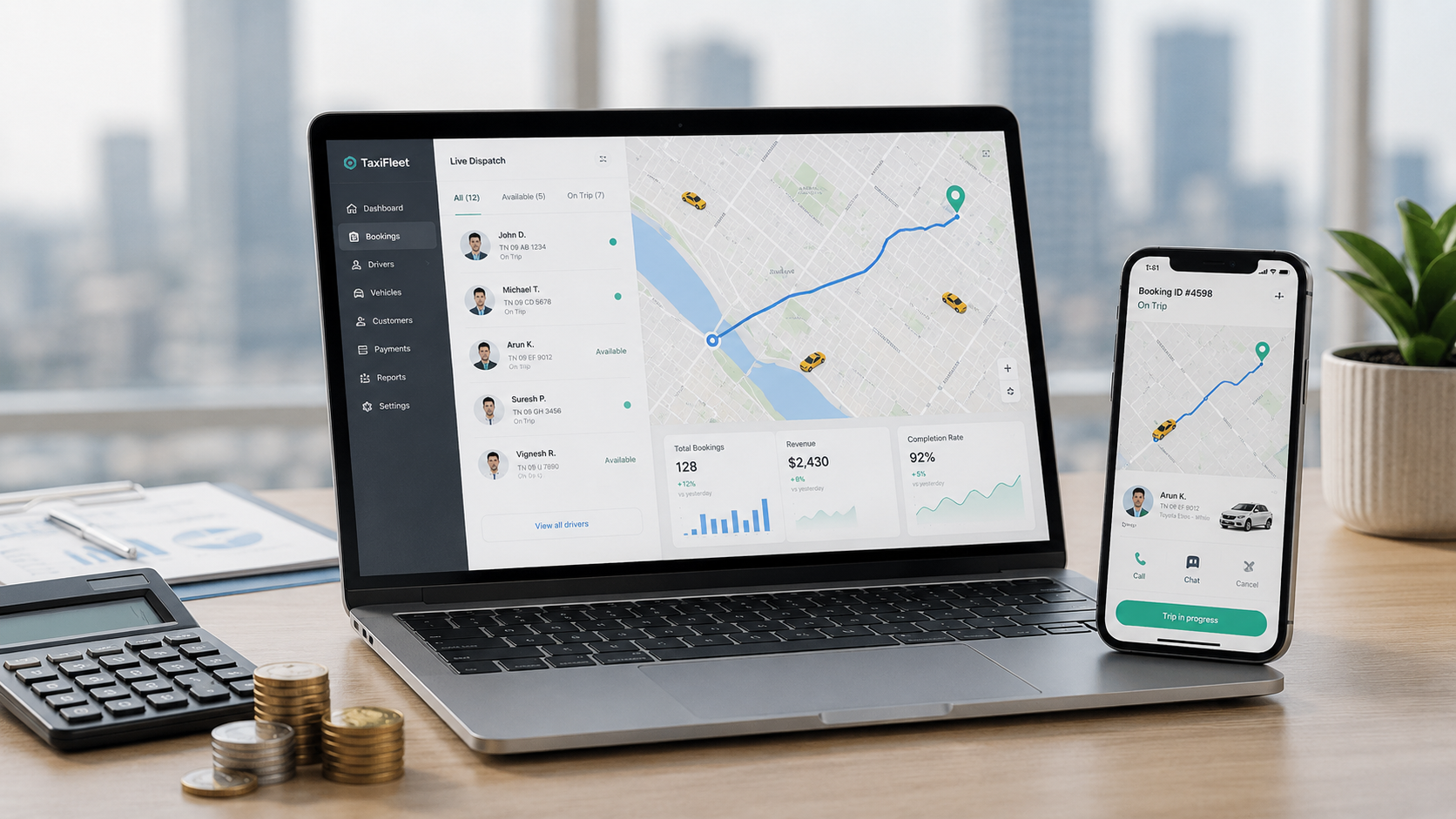
Launching or upgrading a taxi business often starts with the same question: how much does taxi dispatch software actually cost?
The challenge is that pricing varies significantly between providers. Some platforms charge a monthly subscription, others use per-vehicle or per-booking pricing, and enterprise solutions often rely on custom quotes. The final cost also depends on factors such as fleet size, required features, passenger and driver apps, integrations, and ongoing support.
As a result, two taxi operators searching for dispatch software can receive completely different pricing proposals for what appears to be a similar solution.
In this guide, we break down typical taxi dispatch software costs in 2026, explain the most common pricing models, compare booking tools with full dispatch platforms, and show what operators should expect when budgeting for a new system.
How Much Does Taxi Dispatch Software Cost in the UK and Europe?
The cost of taxi dispatch software in the UK and Europe varies depending on the size of the operation, the number of drivers, and the functionality included in the platform. Small operators can find basic cloud-based solutions for approximately €50–€200 per month, while established taxi companies often invest between €300 and €1,500+ per month for a complete dispatch ecosystem that includes passenger and driver apps, automated dispatching, payment processing, analytics, and business management tools.
When evaluating taxi dispatch software price, it is important to look beyond the monthly subscription fee. Some providers charge per vehicle, per driver, or per booking, while others offer fixed subscription plans. Additional costs may include setup services, custom integrations, white-label mobile applications, payment gateway fees, and ongoing support.
As a result, the total cost of ownership can differ significantly between platforms, even when the advertised monthly price appears similar.
Taxi Dispatch Software Cost Comparison
| Solution Type | Monthly Cost Range | Best For |
|---|---|---|
| Basic booking and dispatch tools | €50–€200 | Small operators and startups |
| Small fleet dispatch platform | €200–€500 | Fleets with 10–50 drivers |
| Full-featured dispatch software with passenger and driver apps | €500–€1,500+ | Growing taxi companies |
| Enterprise or custom solution | Custom pricing | Large multi-city operations |
These ranges should be viewed as general market benchmarks, as actual pricing varies depending on deployment model, included features, and vendor-specific pricing structures.
Key Factors That Affect Taxi Dispatch Software Pricing
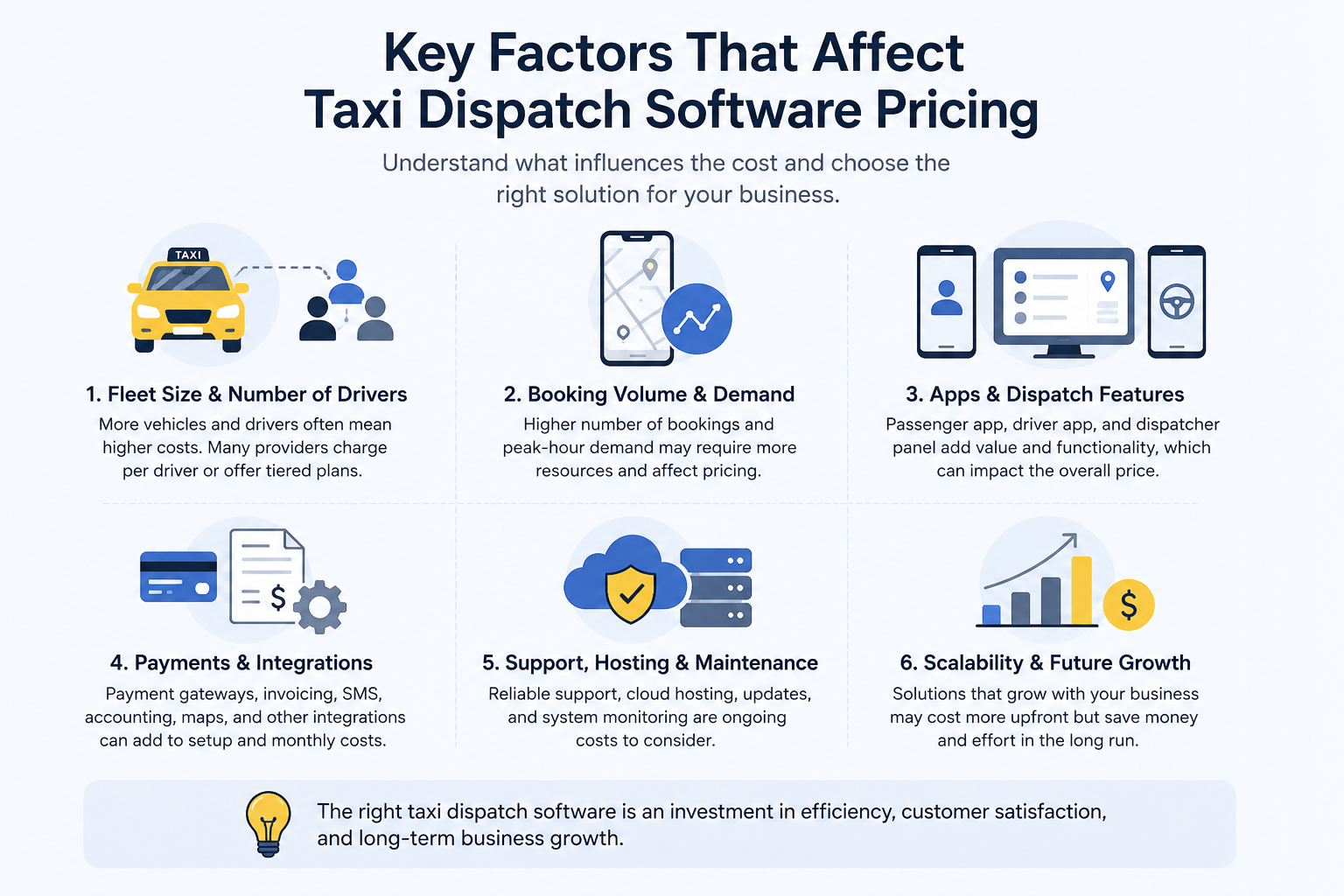
The cost of taxi dispatch software depends on much more than a monthly subscription fee. Fleet size, booking volume, platform features, integrations, and support requirements can all affect the final taxi software cost. Understanding these factors makes it easier to compare providers and estimate the budget required for your operation.
-
Fleet Size and Number of Drivers
Fleet size is one of the most common factors affecting software pricing. A company operating five vehicles has very different requirements from a business managing fifty or more drivers. Some providers charge based on the number of active drivers or vehicles, while others offer tiered subscription plans. As fleets grow, additional user accounts, management tools, and reporting capabilities often increase the overall cost.
-
Booking Volume and Peak-Hour Demand
The number of bookings processed each month can also influence software costs. Some platforms charge per ride or transaction, while others include booking limits within specific pricing plans. Businesses with high ride volumes or strong peak-hour demand may require more system resources, advanced dispatch automation, and additional capacity, which can affect pricing over time.
-
Passenger App, Driver App, and Dispatcher Panel
The functionality included in the platform plays a major role in determining cost. Basic solutions may only provide booking and dispatch tools, while more advanced systems include passenger apps, driver apps, dispatcher workspaces, and administrative dashboards.
For example, Mobion combines the passenger app, driver app, and dispatch software into a single platform, allowing operators to manage bookings, drivers, ride assignment, and daily operations from one system. This approach reduces the need for multiple third-party tools and helps keep operational workflows connected as the business grows.
More comprehensive platforms typically require a higher investment, but they often deliver greater efficiency and scalability over the long term.
-
Payments, Invoicing, and Local Integrations
Many operators require integrations beyond core dispatch functionality. Payment gateways, invoicing tools, SMS providers, accounting systems, mapping services, and local business software can all add to implementation and operating costs. While some platforms include standard integrations in their subscription plans, others charge additional setup or maintenance fees.
-
Support, Hosting, and Maintenance
Software costs do not end after implementation. Cloud hosting, security updates, technical support, maintenance, and system monitoring are all part of the total cost of ownership. Reliable support becomes increasingly important as operations grow, making service quality just as important as the software features themselves.
Understanding these factors makes it easier to compare vendors and choose a pricing model that fits both your current needs and future growth plans.
Taxi Dispatch Software Pricing Models Explained
When evaluating taxi dispatch software pricing, it is important to understand how vendors structure their costs. Two platforms with similar features may use completely different pricing models, resulting in significantly different long-term expenses.
Some providers charge a fixed monthly subscription, while others price their software based on the number of vehicles, drivers, or completed bookings. Enterprise vendors may also offer one-time licensing or fully customized pricing for larger operations.
Understanding these models helps operators compare solutions more accurately and choose an option that aligns with their fleet size, growth plans, and budget.
Comparison of Common Taxi Dispatch Software Pricing Models
| Pricing Model | How It Works | Best For |
|---|---|---|
| Subscription-Based | Fixed monthly fee regardless of ride volume | Small and medium fleets |
| Per Vehicle | Cost increases based on the number of vehicles | Growing fleets |
| Per Driver | Charged for each active driver account | Driver-focused operations |
| Per Booking | Cost is tied to completed rides or bookings | Startups and low-volume operators |
| One-Time License | Large upfront payment with ongoing maintenance costs | Established businesses with internal IT resources |
| Custom Enterprise Solution | Pricing tailored to specific requirements | Large multi-city operations |
While pricing models determine how software is charged, the overall cost also depends on the type of solution you choose. Basic booking tools and full dispatch platforms are designed for different operational needs and can vary significantly in both functionality and price.
Taxi Booking Software Pricing vs Full Dispatch Platform Cost
Many operators comparing taxi booking software pricing focus primarily on the monthly subscription cost. However, the price difference between basic booking tools and a full dispatch platform often reflects significant differences in functionality. Understanding what is included in each type of solution helps operators choose the right system for their current needs and future growth.
What Basic Booking Tools Usually Include
Basic booking software is designed to help operators accept and manage ride requests without the complexity of a full dispatch platform. These solutions typically include an online booking form, basic trip management, driver assignment, customer notifications, and simple reporting capabilities. Their primary goal is to streamline the booking process and reduce the amount of manual work required to manage daily operations.
For startups and small taxi businesses, basic booking tools often provide enough functionality to launch services and begin serving customers. Compared to managing bookings through phone calls, spreadsheets, or messaging apps, these systems improve operational visibility and create a more structured workflow. However, they are often limited in terms of automation, analytics, and operational control, which can become important as businesses grow.
Understanding software costs is important, but for many startups the biggest challenge is getting started without a large upfront investment. To address this, Mobion offers Starter, a free plan that includes an online booking page, driver app, and admin panel. Operators can launch and manage their service without software costs until they reach 2,000 completed rides, making it easier to enter the market and validate their business model before upgrading to a larger platform.
What Full Dispatch Software Includes
Full dispatch software is designed to manage every stage of the transportation process, from booking and dispatching to driver management, payments, reporting, and customer communication. Unlike basic booking tools, these platforms provide a centralized environment where operators can oversee daily operations, monitor fleet performance, automate routine tasks, and manage business growth from a single system.
Full dispatch platforms typically include passenger and driver applications, dispatcher workspaces, administrative dashboards, payment processing, automated ride assignment, notifications, reporting, and analytics.
Mobion follows this approach through its ride-hailing solution, which combines passenger and driver apps, dispatching tools, an admin panel, a booking website, and business management features within a single ecosystem. By connecting all core operational tools in one platform, operators can reduce manual work, improve visibility across the business, and avoid the complexity of managing multiple disconnected systems as they scale.
Premium Taxi Dispatch Software: What Are You Paying For?
-
Automation and Smart Dispatching
One of the biggest advantages of premium software is automation. Instead of manually assigning rides, dispatchers can use intelligent matching rules based on driver availability, location, vehicle type, or service category. Automated dispatching helps reduce response times, improve fleet utilization, and minimize operational errors.
As ride volumes increase, automation becomes increasingly important. Businesses that process hundreds or thousands of bookings each month often rely on smart dispatching tools to maintain service quality without continuously expanding their dispatch team.
-
White-Label Passenger and Driver Apps
Premium platforms often include branded passenger and driver applications. Rather than relying on third-party marketplaces, operators can provide their own mobile experience, strengthen customer loyalty, and maintain direct control over communication, promotions, and booking data.
White-label applications also help create a more professional brand presence. Features such as ride tracking, push notifications, digital payments, driver status updates, and loyalty programs can significantly improve both customer and driver experience.
-
Corporate Accounts and Multi-Location Management
Many growing transportation companies serve business clients, hotels, airports, healthcare organizations, or operate in multiple cities. Premium platforms typically include tools for managing corporate accounts, contract pricing, invoicing, centralized reporting, and user permissions across different branches.
These capabilities become increasingly valuable as operations expand. Instead of managing multiple systems or separate databases, operators can oversee all locations and customer accounts from a single platform.
-
Analytics, Reporting, and Fleet Performance
Advanced reporting tools provide visibility into every aspect of the business. Operators can monitor booking trends, driver activity, revenue performance, cancellation rates, response times, and customer behavior through centralized dashboards.
Access to reliable operational data helps businesses identify inefficiencies, optimize resource allocation, and make informed decisions. For growing fleets, analytics often become one of the most valuable features, helping operators improve profitability and service quality over time.
Taxi Software Cost Factors in the UK and Europe
The taxi software cost for operators in the UK and Europe is influenced by more than just platform features. Local regulations, payment processing requirements, labor costs, and customer expectations can all affect the total investment required.
For example, operators may need integrations with local payment providers, accounting systems, mapping services, or regulatory reporting tools. Businesses operating in multiple countries often require multilingual interfaces, multi-currency support, and region-specific configurations, which can increase implementation complexity.
Another important factor is service quality. Customers across the UK and Europe increasingly expect mobile booking, real-time ride tracking, digital payments, and automated notifications as standard features. According to mobility industry forecasts, the ride-hailing market continues to grow globally, increasing demand for digital-first customer experiences and operational efficiency.
How to Estimate Your Taxi Dispatch Software Cost
Estimating your taxi dispatch software cost starts with understanding your operational requirements. The right solution for a startup with five drivers will look very different from the system needed by a company managing hundreds of daily bookings across multiple locations. Before comparing providers, it is important to define the size of your fleet, expected booking volume, required features, and growth plans.
When evaluating taxi software price, look beyond the advertised monthly fee. Consider implementation costs, mobile applications, payment integrations, support services, custom development, and any usage-based charges that may apply. A lower subscription fee does not always mean a lower total cost of ownership. Calculating both current needs and future requirements will help you choose a platform that remains cost-effective as your business grows.
How to Choose the Right Taxi Dispatch Software for Your Budget
Choosing software based on price alone can be an expensive mistake. The cheapest option is not always the most cost-effective, and the most expensive platform is not necessarily the best fit for every business. The key is to evaluate software based on the value it provides, the features you need today, and the requirements you may have as your operation grows.
Do Not Compare Price Without Comparing Scope
Two platforms may have similar monthly fees while offering very different levels of functionality. One solution might include passenger and driver apps, dispatching tools, reporting, and payment integrations, while another may charge extra for these features or not offer them at all.
Before comparing prices, review what is included in each package. Looking at features, integrations, and operational capabilities alongside cost will provide a much more accurate comparison.
Check What Is Included in Support
Support can have a significant impact on the long-term value of a software platform. Some providers offer onboarding assistance, technical support, product training, and regular updates as part of the subscription, while others charge additional fees.
Understanding the level of support included can help prevent unexpected costs and reduce operational disruptions when issues arise.
Choose a Platform That Can Scale With Your Fleet
The software that works for a five-vehicle operation may not be suitable for a fleet of fifty drivers. As booking volumes increase, businesses often require additional automation, reporting tools, integrations, and user management capabilities.
Selecting a platform that can support future growth helps avoid costly migrations and system replacements later.
Ask for a Demo Before You Commit
A feature list does not always reflect how software performs in real-world operations. Requesting a live demo allows operators to evaluate the user experience, workflow efficiency, reporting capabilities, and overall suitability of the platform.
A demo also provides an opportunity to discuss pricing, implementation requirements, and future scalability with the vendor before making a long-term commitment.
Final Thoughts on Taxi Dispatch Software Cost
The taxi dispatch software cost in 2026 can range from less than €100 per month for basic booking tools to several thousand euros for enterprise-grade platforms. The right investment depends on factors such as fleet size, booking volume, required features, integrations, support requirements, and future growth plans.
When evaluating taxi dispatch software price, it is important to look beyond the advertised subscription fee. Features such as passenger and driver apps, dispatch automation, reporting, payment processing, corporate account management, and ongoing support can have a significant impact on the total cost of ownership. Rather than choosing the cheapest option, operators should focus on finding a solution that matches their operational needs today while providing the flexibility to scale as the business grows.
A careful comparison of pricing models, included features, and long-term business value will help ensure that the platform remains a worthwhile investment for years to come.
F.A.Q.
Ready to revolutionize your taxi business?
Choose what you need: