
How to Start a Taxi Business in 2026: Step-by-Step Guide


Starting a taxi business can be a profitable opportunity, but success depends on more than purchasing vehicles and hiring drivers. From choosing the right business model to meeting licensing requirements and adopting reliable technology, every decision you make early on will affect your operating costs, scalability, and long-term success.
This step-by-step guide is designed for entrepreneurs, startups, and fleet operators who want to launch or expand a taxi business. You’ll learn how to validate your idea, estimate startup costs, create a business plan, meet legal requirements, and choose the right tools to build a scalable, competitive taxi company.
Is Starting a Taxi Business Worth It?
Despite being a mature and highly competitive industry, the taxi market continues to offer opportunities for new businesses. Demand for reliable taxi services remains strong, and passengers continue to value convenience, availability, and a consistent customer experience. With the right business model, a clear understanding of your local market, and efficient operations, a taxi business can still become a profitable long-term investment.
One of the biggest opportunities today lies in building a business that meets modern customer expectations. As the industry becomes increasingly digital, passengers expect fast online booking, transparent pricing, real-time ride tracking, and a seamless customer experience. Businesses that embrace technology and adapt to these changing expectations are better positioned to compete, attract loyal customers, and achieve sustainable growth.
Choose the Right Taxi Business Model for Your Goals
Before deciding how to start a taxi company, it’s important to choose a business model that matches your budget, goals, and local market. The right approach will influence your startup costs, daily operations, growth potential, and the technology you’ll need as your business expands. Some entrepreneurs begin with a single vehicle, while others build a small fleet or focus on managing a network of drivers through a dispatch operation. Understanding the advantages and limitations of each model will help you make a more informed decision from the start.
Solo Driver Business
Launching your business as a solo driver is one of the most affordable ways to enter the taxi industry. With lower upfront costs and fewer operational responsibilities, this model allows you to build experience, understand customer demand, and establish a local reputation before expanding. It’s often the best option for entrepreneurs who want to test the market while keeping financial risks under control.
Small Taxi Fleet
Operating a small fleet creates higher revenue potential and allows you to serve more customers at the same time. However, it also requires stronger operational processes, including driver management, vehicle scheduling, dispatching, and customer support. Investing in the right systems early can help you maintain service quality as your business grows
Taxi Dispatch Business
A taxi dispatch business focuses on managing bookings and coordinating drivers rather than operating every vehicle yourself. Depending on your market, you may work with a mix of employed and independent drivers while using dispatch software to assign rides, monitor operations, and maintain service quality. This model offers strong growth potential because it allows you to grow your business without significantly expanding your own fleet, making it an attractive option for entrepreneurs looking to build a scalable taxi business.
Research Your Local Market Before You Launch
A successful taxi business starts with understanding the market you’ll operate in. Before investing in vehicles, hiring drivers, or launching your service, take time to evaluate local demand and identify the competitive landscape. A thorough market analysis will help you validate your business idea, reduce unnecessary risks, and find opportunities that other operators may have overlooked.
Evaluate Local Demand
Start by identifying who your potential customers are and when they are most likely to use taxi services. Look at population density, commuting patterns, tourism, nightlife, business districts, airports, and public transportation gaps. The goal is to understand where demand exists, when it peaks, and whether your market can support another taxi operator. The more specific your research, the easier it will be to position your business effectively.
Analyze Your Competitors
Research both traditional taxi companies and ride-hailing services operating in your area. Compare their pricing, service coverage, booking experience, customer reviews, and response times. Pay attention to common customer complaints, as they often reveal gaps in the market. The goal is not to copy your competitors. Instead, identify opportunities to provide a better customer experience, improve operational efficiency, or serve customer needs that are not being fully addressed.
Create a Taxi Business Plan
A business plan turns your idea into a clear roadmap for launching and growing your taxi company. It helps you organize your goals, estimate costs, identify potential risks, and make informed decisions before investing time and money. Even if you’re starting with a single vehicle, a well-prepared business plan will give you a stronger foundation and make it easier to scale your business in the future.
What to Include in Your Business Plan
A well-prepared business plan gives you a clear roadmap for launching and growing your taxi business. It should cover not only your financial projections but also how you’ll attract customers, manage daily operations, and scale over time.
At a minimum, your business plan should include:
- Business goals and target market – Define who your customers are and what you want to achieve.
- Business model – Explain how your company will operate and generate revenue.
- Startup budget and operating costs – Estimate your initial investment and ongoing expenses.
- Pricing strategy – Determine how you’ll price your services to stay both competitive and profitable.
- Revenue projections – Forecast your expected income based on realistic assumptions.
- Marketing plan – Describe how you’ll attract and retain customers.
- Operations plan – Outline how you’ll manage bookings, drivers, and daily workflows
- Technology stack – List the software and tools you’ll use to run your business efficiently.
- Growth strategy – Explain how you plan to expand your fleet, customer base, or service area.
A detailed business plan won’t guarantee success, but it will help you make better decisions, identify potential risks early, and measure your progress as your business grows.
Define Your Unique Selling Proposition (USP)
Your USP explains why customers should choose your taxi service instead of another provider. It could be faster response times, transparent pricing, better customer service, specialized transportation, or a more convenient booking experience. A strong USP should address real customer needs and clearly differentiate your business from local competitors. It should also guide your branding, marketing, and service strategy from day one.
What Do You Need to Start a Taxi Business?
Before you set up a taxi company, make sure you have all the essential components in place. Some requirements are legal, while others are operational or technology-related. Preparing everything in advance will help you avoid delays, stay compliant with local regulations, and launch your business with confidence.
Before launching, make sure you have:
- Business registration. Register your company according to local legal requirements.
- Taxi or private hire licenses. Obtain all permits required to operate legally in your target market.
- Suitable vehicles. Choose vehicles that comply with local regulations and meet customer expectations for safety and comfort.
- Commercial insurance. Protect your business, vehicles, drivers, and passengers with the appropriate insurance coverage.
- Qualified drivers. Hire licensed drivers and complete any required background checks or verification procedures.
- Booking channels. Decide how customers will request rides, whether through a mobile app, website, phone, or multiple channels.
- Payment system. Offer secure and convenient payment options that match customer preferences.
- Taxi dispatch software. Use software to manage bookings, dispatch drivers, monitor trips, and streamline daily operations.
- Website or online booking page. Create a professional online presence where customers can learn about your service and book rides.
- Business phone number and support process. Make it easy for customers and drivers to contact your business when they need assistance.
- Business phone number and support process. Make it easy for customers and drivers to contact your business when they need assistance.
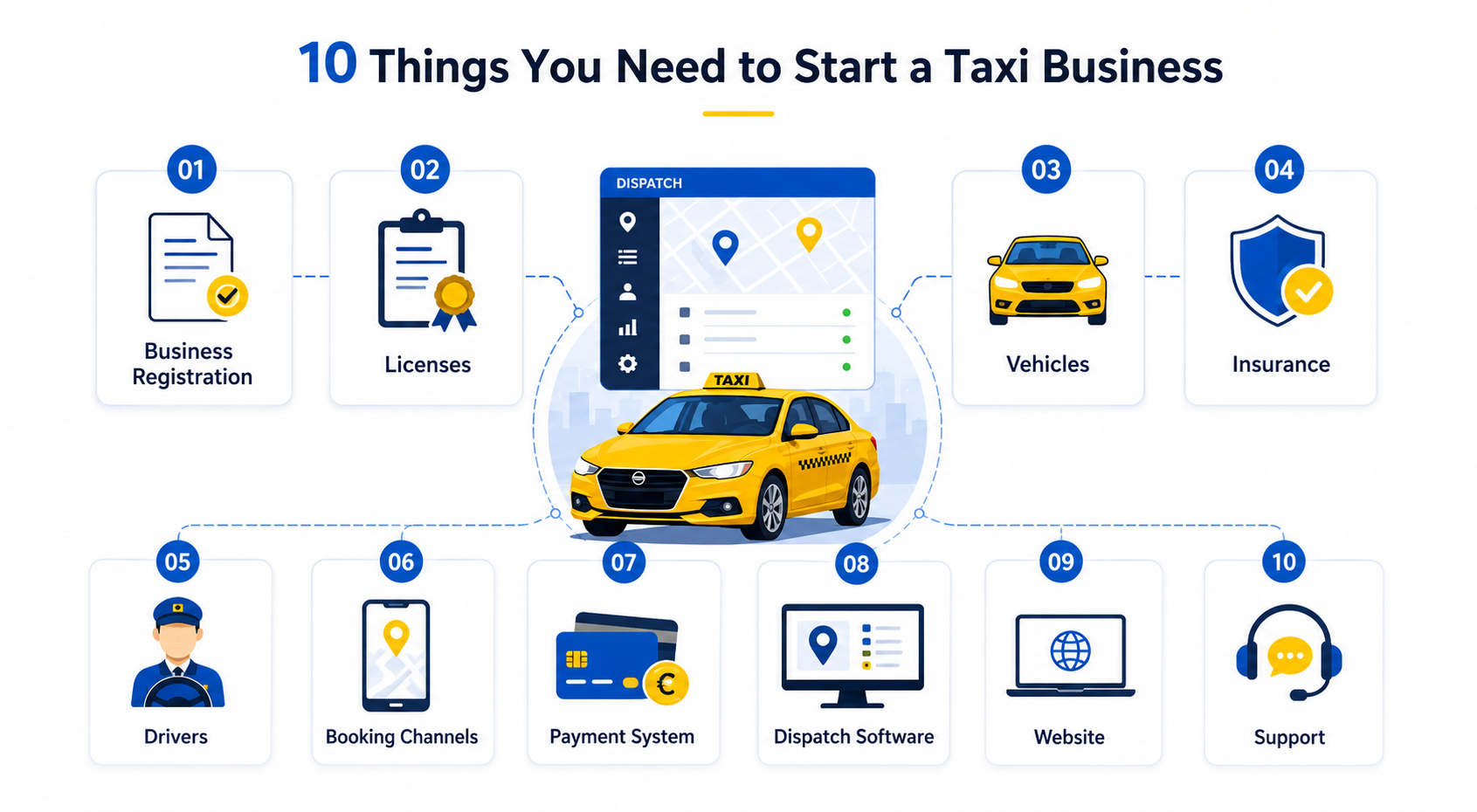
At first glance, this checklist may seem overwhelming, especially if you’re launching your first taxi business. You can either source, integrate, and manage each component separately, or choose an ecosystem that already brings many of these tools together.
Mobion taxi service is built specifically for taxi operators and provides everything needed to launch and manage a modern taxi business in one ecosystem. It includes taxi dispatch software, rider and driver apps, an online booking page, payment integrations, and business management tools that work seamlessly together. This means you can spend less time configuring different systems and more time focusing on launching and growing your business.
Legal and Operational Requirements to Start a Taxi Business
If you’re planning to start a taxi fleet business, understanding your local regulations is an essential part of the launch process. Every country and city has its own licensing rules, vehicle standards, and driver requirements that taxi operators must follow. Meeting these requirements before launch will help you avoid unnecessary delays, reduce regulatory risks, and create a stronger foundation for your business.
Business Registration and Operator Licensing
Before launching your taxi service, register your business and obtain all licenses required in your market. Depending on local regulations, you may need separate permits for the company, drivers, vehicles, or a dedicated operator license. Since these requirements vary significantly between countries and cities, always verify the rules that apply to your location before starting operations.
Driver and Vehicle Requirements
Both drivers and vehicles must meet the standards established by local authorities. This may include driver licensing, background checks, vehicle inspections, commercial insurance, and compliance with safety regulations. Meeting these requirements not only allows you to operate legally but also helps build customer trust and deliver a reliable taxi service.
How Much Does It Cost to Start a Taxi Business?
Before estimating your startup budget, it’s important to understand that there’s no universal investment that applies to every taxi business. Every launch is different, and the total budget depends on the decisions you make before getting started. The good news is that once you identify the key cost drivers, it becomes much easier to estimate the investment required for your specific business.
Your startup costs will typically depend on factors such as:
- Your country and local licensing requirements.
- Whether you launch as a solo driver or with a fleet.
- Whether you buy, lease, or already own your vehicles.
- The software and technology you use to manage your business.
- Your marketing budget and customer acquisition strategy.
Not every investment has to be made on day one. Many successful taxi businesses start by focusing on the essentials, validating demand, and expanding their technology stack as the business grows.
For businesses that are just entering the market, a free solution like Mobion Starter can help reduce upfront software costs while providing everything needed to launch. Mobion Starter is the free plan of the Mobion platform, providing the core functionality for launching and managing a taxi business from day one without a significant upfront software investment. It includes an Online Booking Page, Driver App, and Admin Panel, allowing operators to start accepting bookings, manage drivers, and validate their business model before upgrading to a more advanced setup.
Choose the Right Vehicles for Your Taxi Business
Choosing the right vehicles is one of the most important decisions when starting a taxi business. The vehicles you operate directly affect your operating costs, customer experience, maintenance expenses, and long-term profitability. Rather than focusing only on the purchase price, consider the total cost of ownership and how each vehicle fits your business model.
When evaluating vehicles for your fleet, pay attention to:
- Fuel efficiency or EV operating costs.
- Reliability and maintenance requirements.
- Passenger comfort and luggage space.
- Safety ratings and local regulatory compliance.
- Availability of replacement parts and service centers.
- Resale value and long-term ownership costs.
The best choice isn’t necessarily the most expensive or the newest vehicle. The right fleet is the one that matches local customer expectations while keeping operating costs under control and supporting sustainable business growth.
Taxi Insurance: What Coverage Do You Need?
Choosing the right insurance is an important step before launching a taxi business. Beyond meeting local legal requirements, the right policy helps protect your vehicles, drivers, passengers, and finances from unexpected events. Insurance requirements vary by country, so it’s important to review local regulations and compare providers before purchasing a policy.
Types of Insurance to Consider
When comparing insurance providers, consider policies that include:
- Commercial vehicle insurance. Covers vehicles used for commercial passenger transportation and is often a legal requirement.
- Passenger liability insurance. Protects the business against claims related to passenger injuries or property damage during a trip.
- Driver liability coverage. Provides protection for drivers while operating company vehicles.
- Comprehensive and collision insurance. Helps cover repair or replacement costs after accidents, theft, fire, or vandalism.
- Public liability insurance. Covers claims involving third parties who are not passengers, such as pedestrians or damage to other property.
- Employer liability or workers’ compensation. May be required when hiring employed drivers, depending on local labor laws.
The lowest premium isn’t always the best choice. Compare policy limits, exclusions, deductibles, and claim procedures to make sure the coverage matches the way your taxi business operates.
Set Up Taxi Booking and Dispatch Software
Once the legal, operational, and insurance requirements are in place, the next step is choosing the software that will support your day-to-day operations. Modern taxi businesses rely on technology to manage bookings, dispatch drivers, monitor trips, process payments, and keep operations running efficiently.
When evaluating taxi software, look for features such as:
- Online Booking Page.
- Driver App.
- Admin Panel.
- Automated dispatching.
- Real-time trip tracking.
- Payment management.
- Reporting and analytics.
- Third-party integrations.
Choosing the right taxi software isn’t just about checking whether individual features are available. It’s equally important to consider how well these tools work together in day-to-day operations. Managing bookings, drivers, dispatching, payments, and reporting from a single system helps reduce manual work, improve operational efficiency, and simplify everyday business management.
Mobion Dispatch System brings all of these capabilities together in a single platform, making day-to-day taxi operations easier to manage. It combines booking management, intelligent dispatching, driver and fleet management, trip monitoring, reporting, and integrations, helping taxi operators run their business more efficiently from one place.
Final Thoughts
Launching a taxi business is a process rather than a single milestone. The stronger your preparation before accepting the first booking, the easier it becomes to grow efficiently and deliver a consistent customer experience as your business evolves.
Every taxi business follows its own path, so there is no universal formula for success. The goal isn’t to launch with the biggest fleet or the highest budget. It’s to build a business on a solid foundation, validate your idea, and improve your operations as you gain customers and experience.
By following the steps in this guide, you’ll be better prepared to launch with confidence, avoid common pitfalls, and create a taxi business that’s built for long-term success.
F.A.Q.
Ready to revolutionize your taxi business?
Choose what you need: