
Is Taxi Driving Profitable in 2026?

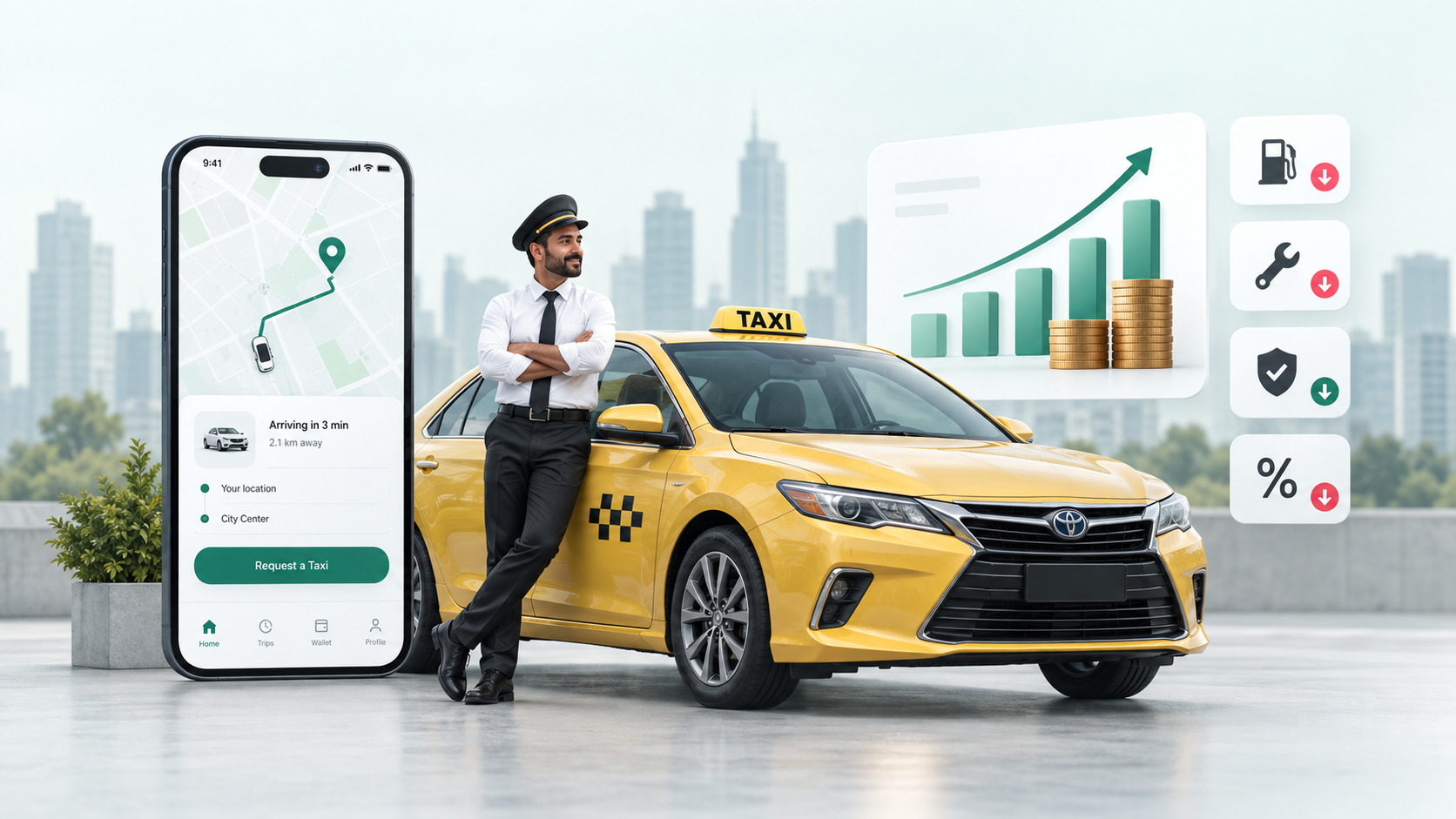
With large ride hailing platforms operating in hundreds of cities and competition for passengers already high, starting or running an independent taxi service may seem like a difficult way to build a profitable business. Add rising vehicle, fuel, insurance, and operating costs, and the question becomes even more relevant.
Yet there is still plenty of room for independent taxi businesses to compete and grow. Passenger transportation is becoming increasingly digital across different regions, while local taxi companies have more ways to accept direct bookings, manage drivers efficiently, and reduce their dependence on aggregators. Profitability therefore depends less on simply entering the market and more on how the business is structured and operated.
In this article, we look at how much taxi drivers can earn, the main costs behind each ride, what affects profitability, and how taxi businesses can improve their margins through better operations, direct bookings, and technology.
Before you start a taxi business, it is worth understanding these factors and how they can shape its profitability from the beginning.
Understanding Taxi Driver Income and Earning Potential
One of the first questions behind any taxi business is whether the numbers actually work. A steady flow of bookings may look promising, but the number of completed rides alone says little about how much income the operation ultimately generates.
Several factors shape taxi driver earnings, including local fares and demand, the number and type of bookings, working hours, and whether rides come directly from passengers or through aggregator platforms. The business model matters too. Independent drivers who develop a base of repeat customers may retain more revenue from each trip, while those relying heavily on aggregators have to account for commission on completed rides.
This is why gross revenue should always be considered alongside operating costs. Fuel, insurance, vehicle financing or leasing, maintenance, licensing, and other expenses determine how much of that revenue actually becomes profit. In markets with higher fares, earning potential may be stronger, but operating costs and competition can be higher as well.
Ultimately, the more useful question is not simply how much a driver earns per day or month, but how much remains after the real cost of providing those rides.
The Costs Behind a Profitable Taxi Operation
Revenue only becomes meaningful once you know what it costs to keep a vehicle on the road. The cost of running a taxi includes both expenses that occur with every trip and fixed costs that continue regardless of how many passengers a driver serves.
Fuel or charging is usually one of the most visible expenses, but it is only part of the calculation. Insurance, vehicle financing or leasing, regular maintenance, repairs, tires, cleaning, licensing, and local permits all reduce the margin on each ride. Vehicles used commercially also accumulate mileage quickly, which makes depreciation and replacement costs important to consider over the longer term.
There are also costs tied directly to the way bookings are generated. Aggregator commissions, payment processing fees, and marketing expenses can take another share of each fare. Understanding these costs individually makes it much easier to see where a taxi operation is profitable and where its margins are being lost.
What Has the Biggest Impact on Taxi Profitability?
Profitability is shaped not only by fares, but by how efficiently a taxi business turns available driving time into paid trips. Some taxi driver expenses are relatively predictable, while others increase or decrease depending on demand, location, working patterns, and the way passengers book their rides. These variables can make a significant difference even between drivers operating in the same city.
Demand and Location
A busy market does not automatically mean better margins. What matters is whether passenger demand is consistent enough to keep vehicles occupied throughout the day. Airports, business districts, nightlife areas, hotels, and transport hubs can generate strong demand at specific times, while residential or suburban areas may produce fewer but potentially longer trips. Understanding these patterns helps drivers spend more time where bookings are actually likely to happen.
Working Hours
When a driver works can be just as important as how many hours they spend on the road. Morning and evening commutes, weekends, major events, airport peaks, and late night periods can generate more bookings than quieter hours. A shorter shift built around strong demand can sometimes produce better results than a longer day with significant idle time.
Empty Miles and Downtime
Every kilometer driven without a passenger still consumes fuel, adds mileage to the vehicle, and takes up working time. The same applies to long periods spent waiting for the next booking. For taxi businesses managing multiple drivers, reducing unnecessary movement between rides and improving trip allocation can have a direct impact on operating costs. The goal is not simply to complete more trips, but to increase the share of working time and mileage that actually generates revenue.
Platform Commissions
Aggregator platforms can provide access to a large passenger base, particularly when a business is new or demand is inconsistent. The tradeoff is that a percentage of each fare goes to the platform. The more heavily a driver or taxi company depends on aggregator bookings, the more these commissions affect overall margins. Building direct booking channels alongside aggregator demand gives operators greater control over how much revenue they retain from each ride.
How Can Taxi Drivers Increase Their Profitability?
Improving profitability does not necessarily mean working longer hours or raising fares. In many cases, the bigger opportunity is to make each working hour more productive, reduce unnecessary costs, and retain more revenue from every completed ride. This changes the answer to how much do taxi drivers earn, because two drivers generating similar gross revenue can end the month with very different profits.
Some of the most practical ways to improve profitability include:
- Focusing working hours on periods of stronger passenger demand
- Reducing empty mileage between completed and upcoming rides
- Building a base of repeat customers and direct bookings
- Tracking which routes and ride types generate better returns
- Controlling fuel, maintenance, and other recurring operating costs
- Reducing dependence on high commission booking channels
Technology can make many of these improvements easier to manage in everyday work. The Mobion Driver App gives drivers one place to receive and manage ride requests, navigate to pickup and dropoff points, update trip statuses, and stay connected with dispatchers. For taxi businesses, this creates a more organized workflow between drivers and operators and helps turn more working time into productive, revenue generating activity.
The strongest results usually come from combining these improvements rather than relying on a single change. Better use of working hours, tighter cost control, more direct demand, and efficient day to day operations can all increase the share of revenue that ultimately remains as profit.
Direct Bookings vs. Aggregator Platforms: Which Model Is More Profitable?
Aggregator platforms can be valuable for generating demand, especially when a taxi business is new and has not yet built a customer base of its own. They give drivers access to an established pool of passengers and remove much of the work involved in attracting each new booking. That convenience, however, comes at a cost.
Direct bookings change the economics of each ride. Instead of paying a commission to an aggregator, the business keeps a larger share of the fare and owns the relationship with the passenger. It can set its own pricing, encourage repeat bookings, and build customer loyalty over time. The challenge is that the operator is responsible for creating and maintaining its own booking channels and attracting passengers to them.
| Direct Bookings | Aggregator Platforms | |
|---|---|---|
| Commission per ride | No aggregator commission | Commission charged on completed rides |
| Access to demand | Business generates its own demand | Immediate access to an existing passenger base |
| Pricing control | Operator controls fares and pricing rules | Pricing is influenced or controlled by the platform |
| Customer relationship | Direct relationship with passengers | Customer relationship largely stays with the aggregator |
| Repeat bookings | Can be encouraged through the business's own channels | Passengers typically return to the platform |
| Long term margins | Greater potential to retain revenue from each ride | Margins remain affected by platform commissions |
For many taxi businesses, the most practical approach is not choosing one channel exclusively. Aggregators can help fill gaps in demand, while direct bookings can gradually become a more profitable source of repeat business. The stronger the direct channel becomes, the more control the operator gains over margins, pricing, and the customer relationship.
How Technology Improves Taxi Business Efficiency
Profitability depends not only on how many bookings a taxi business receives, but also on how efficiently those bookings move through the entire operation. Manual dispatching, fragmented communication with drivers, slow booking management, and limited visibility into active trips can create unnecessary work and make it harder to use vehicles and drivers effectively.
A connected system brings these processes together. Mobion provides taxi businesses with tools for managing bookings, dispatching rides, coordinating drivers, monitoring trips, and keeping day to day operations in one place. Instead of switching between separate tools or relying on calls and messages, operators can manage the ride lifecycle from booking to completion within a single system.
This also creates a better foundation for growth. As booking volumes increase or more drivers join the fleet, the business can handle additional demand without adding the same amount of manual operational work. Mobion's mobility platform is designed to support this model, giving operators the infrastructure to manage their own transportation service while maintaining control over their operations, customers, and brand.
Technology alone does not make a taxi business profitable, but it can remove many of the inefficiencies that gradually reduce margins as the operation grows.
Conclusion
Taxi driving remains a viable way to build a profitable operation in 2026, but the economics behind it have become more important than ever. Revenue alone does not determine success. What matters is how much of that revenue remains after fuel, vehicle costs, insurance, commissions, downtime, and other operating expenses are covered.
The strongest opportunities come from the areas a driver or taxi business can actually control. Reducing empty mileage, working around real passenger demand, building repeat business, increasing the share of direct bookings, and managing each ride efficiently can all improve margins without simply adding more hours on the road.
For growing taxi companies, technology adds another layer of efficiency by connecting bookings, dispatching, drivers, and trip management. It allows the business to handle more demand without increasing manual work at the same pace.
Ultimately, profitability in taxi driving is less about completing the highest possible number of rides and more about making each vehicle, working hour, and booking contribute to a healthier margin.
F.A.Q.
Ready to revolutionize your taxi business?
Choose what you need: